



AI and the Hidden Cost of Water
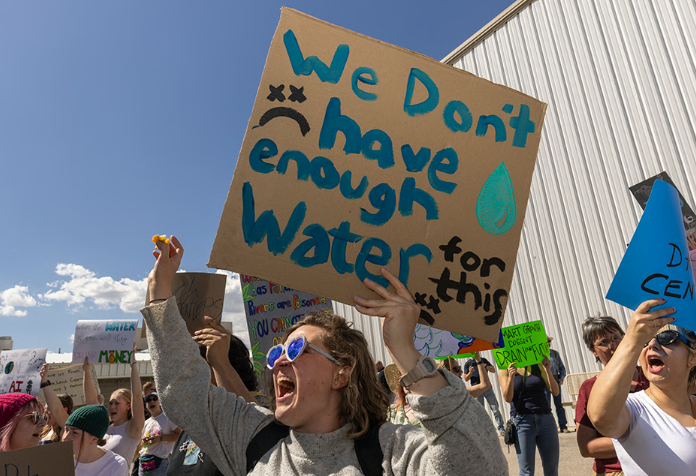
https://media.cybernews.com/images/featured-big/2026/07/we-dont-have-enough-water-for-this.png
Artificial intelligence is often associated with computing power and electricity, but another important resource is involved in keeping AI systems running: water. Large AI data centers generate enormous amounts of heat, requiring sophisticated cooling systems to prevent their processors from overheating. In many facilities, water is used to absorb and remove this heat, creating an environmental concern that is becoming more significant as AI adoption grows.
A 2026 study titled AI Data Centers and the Water Use Feedback Loop explains that the relationship between AI and water is more complicated than simply measuring how much water a data center consumes. Water availability can influence where data centers are built, while AI itself can potentially improve the efficiency of water systems. The researchers examined ten US sites and found that the burden placed on local water utilities varied dramatically, ranging from 0.2% to 134% of the host community’s capacity. At the same time, the overall water consumption of data centers remains relatively small compared with major industries such as agriculture and manufacturing. Researchers estimated that US data center cooling systems consumed approximately 66 billion liters of water in 2023, representing less than 1% of total US water consumption. However, the problem becomes more serious in areas already experiencing water shortages.
The scale could increase as AI continues to expand. One projection cited by Knowable Magazine estimates that US data centers could consume 731 billion to 1.125 trillion liters of water annually by 2030, depending on future demand. This includes not only water used directly for cooling, but also water associated with generating the electricity needed to operate data centers.
Fortunately, technological changes may reduce this impact. Newer AI data centers increasingly use liquid cooling and closed-loop systems, which can recycle cooling fluids rather than continuously consuming fresh water. Other approaches include locating data centers in water-rich areas, increasing the use of renewable energy, improving processor efficiency, and developing alternative cooling technologies. According to researchers cited by Knowable Magazine, strategic decisions about location, energy sources and cooling could substantially reduce AI’s future water footprint.
Ultimately, AI’s water use is not simply a question of whether artificial intelligence “uses too much water.” The impact depends heavily on where data centers are located, how they are powered, how efficiently they operate, and what cooling technology they use. As AI infrastructure expands, understanding this water-use feedback loop will become increasingly important for balancing technological development with sustainable management of local water resources.
Writer:
Vincent Wim Tanudjaja – 2902605485
Supervisor:
D7267 – Samson Ndruru
Sources
- Writer : Akinade, B. A., Amanambu, A. C., Frame, J. M., & Ren, S.
(2026). AI Data Centers and the Water Use Feedback Loop. arXiv:2606.21760. https://arxiv.org/abs/2606.21760 - Writer : Zimmer, K.
(2026, August 24). How much of a problem is AI’s water use? Knowable Magazine. https://knowablemagazine.org/content/article/technology/2026/how-much-water-do-ai-data-centers-use