



Common Misconceptions of AI : Understanding the Reality of Artificial Intelligence
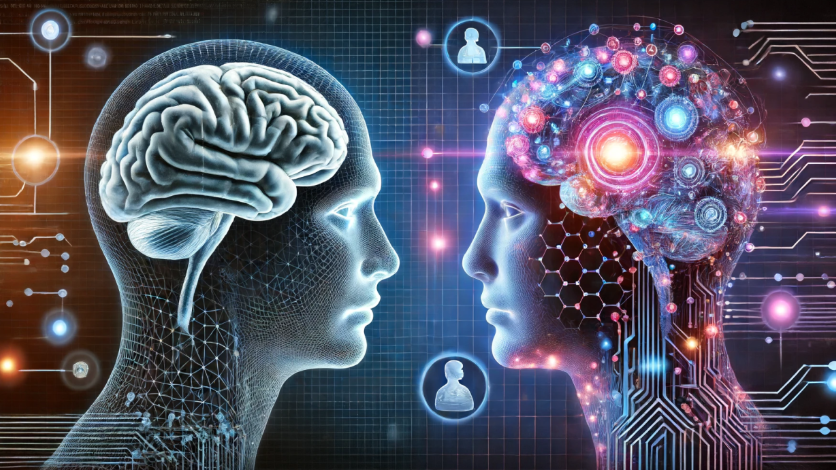 Artificial Intelligence (AI) has rapidly transformed the way people work, communicate, and access information. However, its growing capabilities have also created misconceptions about what AI actually is and what it is capable of doing. Understanding these misconceptions is essential for using AI responsibly and effectively.
AI and the Future of Work
One common misconception is that AI will simply replace human workers. In practice, AI is more commonly used to automate specific tasks rather than replace entire occupations. AI can perform repetitive and data-intensive tasks, while also assisting workers by improving efficiency and reducing the time required for certain activities. Tasks involving communication, decision-making, creativity, and interpersonal interaction can still require significant human involvement, depending on the occupation and context. Therefore, the effects of AI on employment are better understood by examining how specific tasks within jobs are changed or automated rather than assuming that AI will simply replace all human workers (Ho, 2023).
AI Is NOT Completely Objective
Another misconception is that AI produces completely objective results because it is based on mathematics and computer systems. In reality, AI systems are developed using data and design decisions made by humans. If training data contains biases, errors, or insufficient representation of certain groups, these factors can affect the system’s outputs. AI systems do not independently determine whether an output is fair, accurate, or ethically appropriate. Their results are influenced by factors such as the training data, model design, evaluation methods, and the way the system is used. As a result, human oversight is important, particularly when AI is applied in situations where errors or biased outcomes could have significant consequences (Callahan, 2023).
AI Does NOT Think Like a Human
The ability of AI systems to generate essays, images, and computer code can make their behavior appear similar to human thinking. However, current AI systems process information using computational models that identify statistical patterns in data. For example, large language models generate text by predicting likely sequences of tokens based on patterns learned during training. Their ability to produce coherent and contextually relevant responses does not demonstrate that they possess human experiences, emotions, or consciousness.
This distinction is important because the quality of an AI system’s output does not necessarily indicate that the system understands information in the same way a human does.
Conclusion
AI is neither a human-like intelligence nor a perfectly objective machine. It is a technology capable of automating certain tasks, identifying patterns in data, generating content, and assisting people across many fields. At the same time, its outputs depend on its training data, model design, and implementation, which means that human evaluation remains important.
The impact of AI should therefore be understood in terms of both its capabilities and its limitations. AI can provide computational assistance at a large scale, while humans remain responsible for interpreting results, applying judgment, and determining how the technology should be used.
Writer:
Vincent Wim Tanudjaja – 2902605485
Supervisor:
D7267 – Samson Ndruru
References
- Callahan, C. (2023, June 5). Here are artificial intelligence’s biggest misconceptions. WorkLife. https://www.worklife.news/technology/ai-mythbuster/
- Ho, V. (2023, November 13). 4 misconceptions about AI. Microsoft. https://news.microsoft.com/source/features/ai/4-misconceptions-about-ai/
- National AI Centre. (n.d.). Myths and limitations. Australian Government Department of Industry, Science and Resources.
- AI Magazine. (n.d.). Common misconceptions about artificial intelligence. AI Magazine.
- National Center for Biotechnology Information. (n.d.). Artificial intelligence: A clarification of misconceptions, myths and desired future. PubMed Central.
Comments :