



The Research Opportunity Related to Cyber in Internet of Vehicle (IoV)
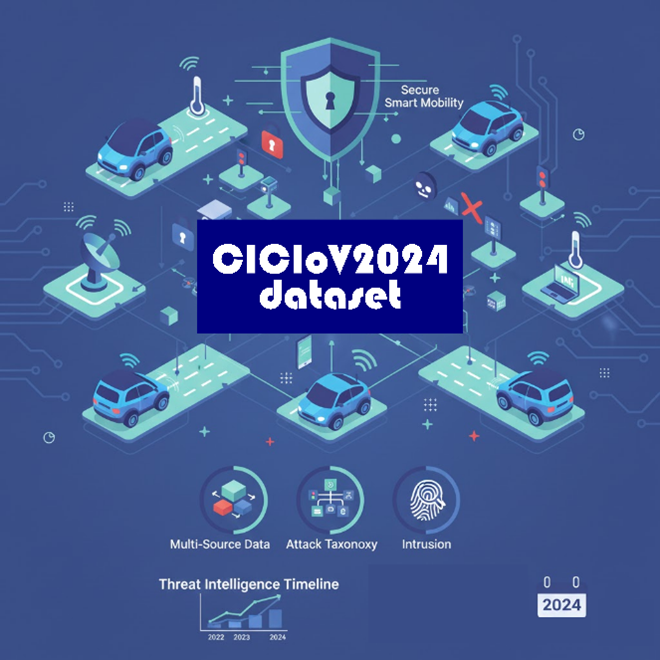
Figure 1. The image illustration of CICIoV2024 dataset.
Nowadays, the concept of the Internet of Things has been embedded into automotive products such as cars, enabling them to have a specific feature to monitor or even controlled by the driver at any time and from any location. This has given rise to a specific research field known as the Internet of Vehicles (IoV) [1]. The internet of vehicles has the ability to access various actuators, such as the gas level, RP readings, speed control, and steering wheel control. As we know, technology that uses network communication is vulnerable to cyber-attacks. In addition, researchers can now use the open dataset to determine suspicious activity involving cars. One dataset that could be used for this research is the CICIoV2024 dataset, which was created in 2024 [2]. Its dataset the record that collected from real architecture of 2019 Ford car that monitored in lab and charged with several cyberattack scenarios like denial-of-service attack, manipulating parameters of gas, RPM, speed, and even steering wheel. Its open dataset can be used for research analysis to detect intrusions in the IoV technology [3][4]. The CICIoV2024 dataset contains 1.408.219 records of tabular data. Of These, 1.223.737 are labelled as benign and 184.482 as attack.
Penulis
Yulianto, S.Kom., M.Kom.
References
[1] R. Abreu, E. Simão, C. Serôdio, F. Branco, and A. Valente, “Enhancing IoT Security in Vehicles: A Comprehensive Review of AI-Driven Solutions for Cyber-Threat Detection,” AI, vol. 5, no. 4, pp. 2279–2299, Nov. 2024, doi: 10.3390/ai5040112.
[2] E. C. P. Neto et al., “CICIoV2024: Advancing realistic IDS approaches against DoS and spoofing attack in IoV CAN bus,” Internet of Things, vol. 26, p. 101209, Jul. 2024, doi: 10.1016/j.iot.2024.101209.
[3] A. R., V. V., N. Srinivas, and A. M. A., “An integrated IDS for the Internet of Vehicles using a Large Language Model framework,” Internet of Things, vol. 33, p. 101666, Sep. 2025, doi: 10.1016/j.iot.2025.101666.
[4] W. M. Alwash, M. Kara, M. A. Aydin, and H. H. Balik, “An Effective Federated Learning Approach for Secure and Private Scalable Intrusion Detection on the Internet of Vehicles,” Concurr Comput, vol. 37, no. 15–17, 2025, doi: 10.1002/cpe.70160.